The People Who Make The Club
No 2: Albert Patrick, General Manager
Years with Blackheath: 44
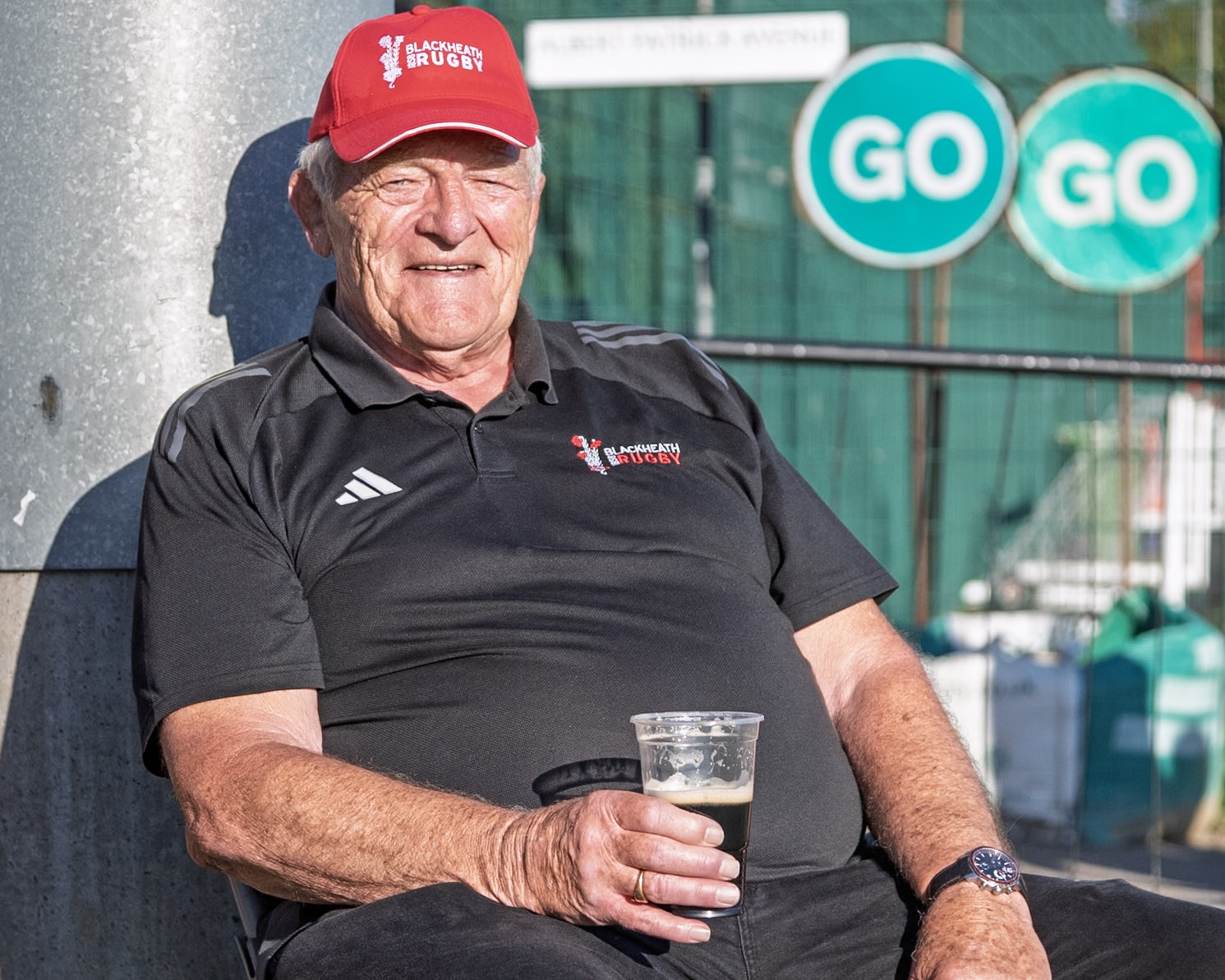
It’s Wednesday morning at Well Hall and there is a buzz of activity as people prepare for the visit of Ealing Trailfinders. At the centre of it all, barking orders as he has at Blackheath for almost 45 years, is Albert Patrick, the general manager. “Dig here, put up signs there, mow this, paint that…” When I ask what his job involves, he replies: “Stress.” It is an odd way to spend your 77th birthday but Albert is in his element.
Blackheath wouldn’t survive without you, I suggest. “Of course it can,” he scoffs. “It will have to one day because I’ll be in a box.” Yet he has no plans to calm down. Before kick-off on match days, you will find him setting out the flags, checking the stores, briefing the ball boys, arranging the mascots. Afterwards, he hopes to lead the Club victory chant. He shares in their successes, consoles their defeats.
It is hard to imagine that this huge chunk of Scottish granite, hewn from the Fife coast in 1949, began his rugby career on the wing. He may once have been an officer in the Flying Squad but that was surely as far as his flying went. Yet when Albert arrived in Hendon as a police cadet 60 years ago, wing was the position they gave him at Chigwell and the Met Police XV.
“I didn’t excel in sport at school and hadn’t played rugby but they said that it was obligatory in the police,” he says. “That and tug of war. I was only 12st in those days.”
After training, he became PC438 HB, walking the beat in Bethnal Green where the Kray Twins had only recently retired from business. As his career grew, so did his physique and by the time Albert went to the Commonwealth Games to wrestle as a super-heavyweight for Scotland in 1978, he was no longer playing on the wing. He competed at the Games three times in all, winning two silvers and a bronze, and was Scotland’s flag-bearer at the closing ceremony in Edinburgh in 1986.
By then he was Chief Inspector Patrick, Clubman. Having moved to Sidcup, he joined Blackheath FC in 1982 to captain the second XV. “The longer I played, the more often I was called on for the firsts,” he says. He started as a No 8, then became a second row and eventually a prop, happy on both sides of the scrum. His final first XV game was against Rosslyn Park, appearing on the teamsheet as Rory O’Sullivan. “I wasn’t registered,” he explains. “We were already relegated so it didn’t really matter.”
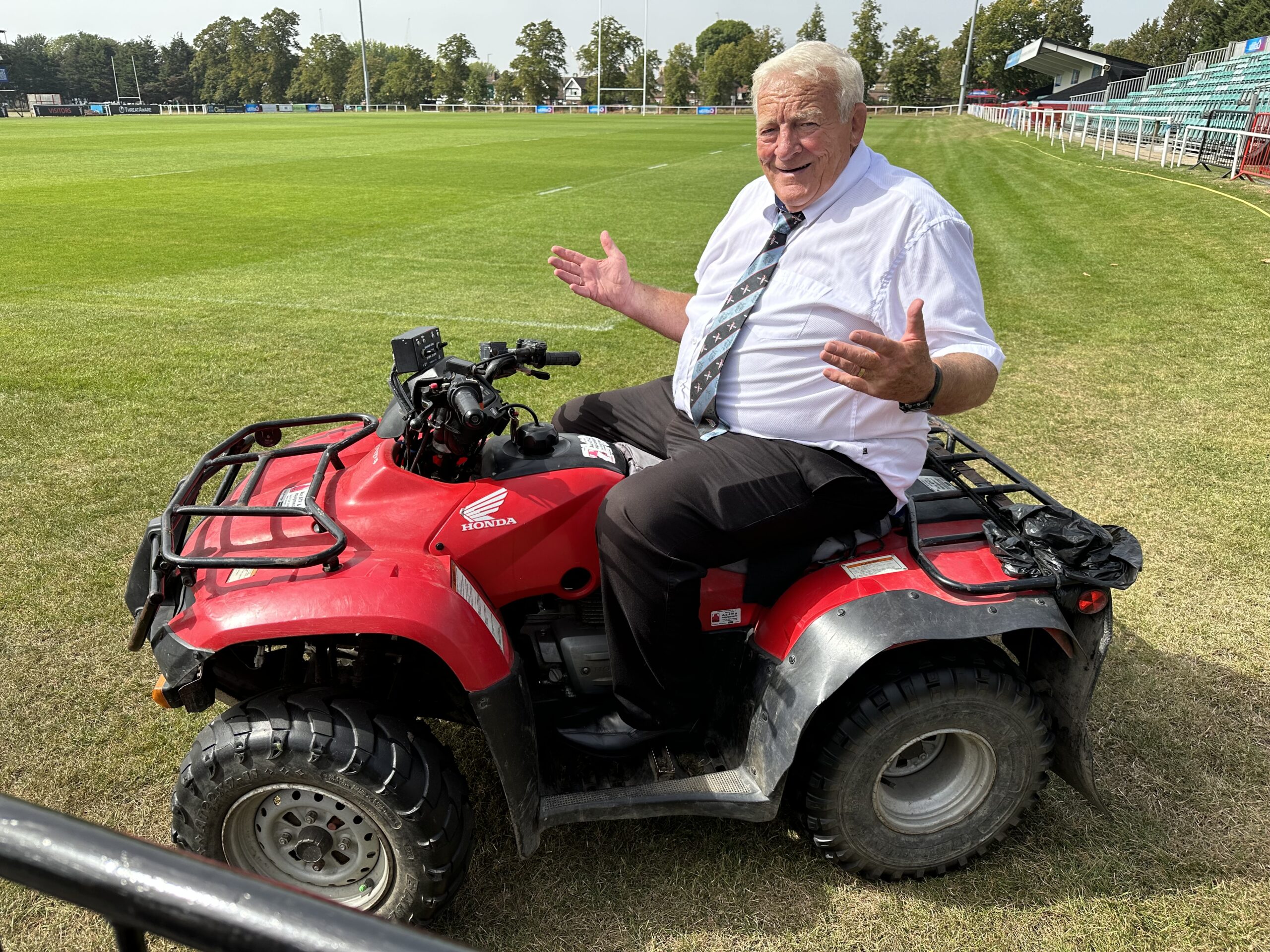
While Albert continued to play social matches and was in the Vets deep into his sixties, he devoted more of his time to helping the club tick along as manager. He is proud of how the Well Hall complex has grown. “When we first came here the grass was about ten feet high and the clubhouse was held together with sticking plaster,” he says.
“Now we have one of the best pitches in the league, the Millwall academy, a new covered stand, better floodlights and the 4G pitch, which is excellent. There’s nothing better than coming in from a tough training session and not be covered in mud.” He says Jordan Burns’s miraculous chip and gather try against Coventry last week was developed on the 4G.
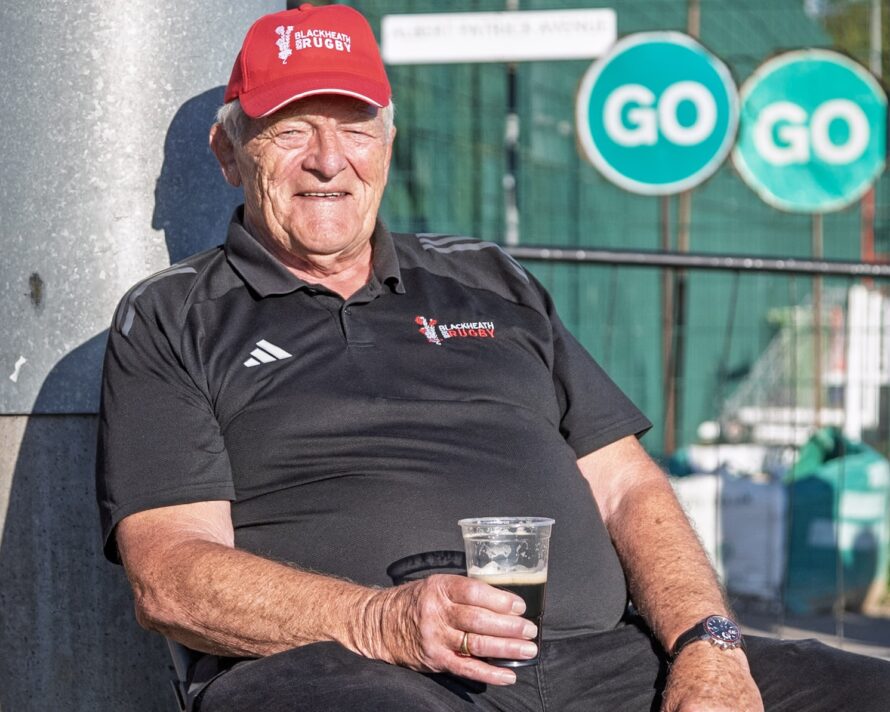
There are two short phrases that everyone associates with Albert. The first appears as two road signs on Albert Patrick Avenue at the east end of Pitch 1: “Go, Go.” That came from when he was in the “mudder squad” (he pronounces it like Taggart) and would brief his men. “They were always my last words to the troops and that’s how I send them out now,” he says.
The other Albert expression comes in the showers after a win, when he calls on the players to “open the windows” and spells out the words “L-O-V-E I-T” before being drenched in beer. “It’s a wonderful tradition that we’ve been doing for about 25 years,” he said. The highlight came last May when he performed it on the pitch at London Scottish after the accession play-off. “What a magical day that was,” he says.
Albert has given more than half his life to Blackheath and says that he wants it to be a place that everyone enjoys “from the youngest mini to the oldest fan” but the sport has changed immensely since 1982. “If this was just a rugby club, it would be brilliant,” he says. “But we’re now a business and we depend on money. But if we can find it, this place can only get better.” Go Go Club!
Patrick Kidd
LATEST NEWS