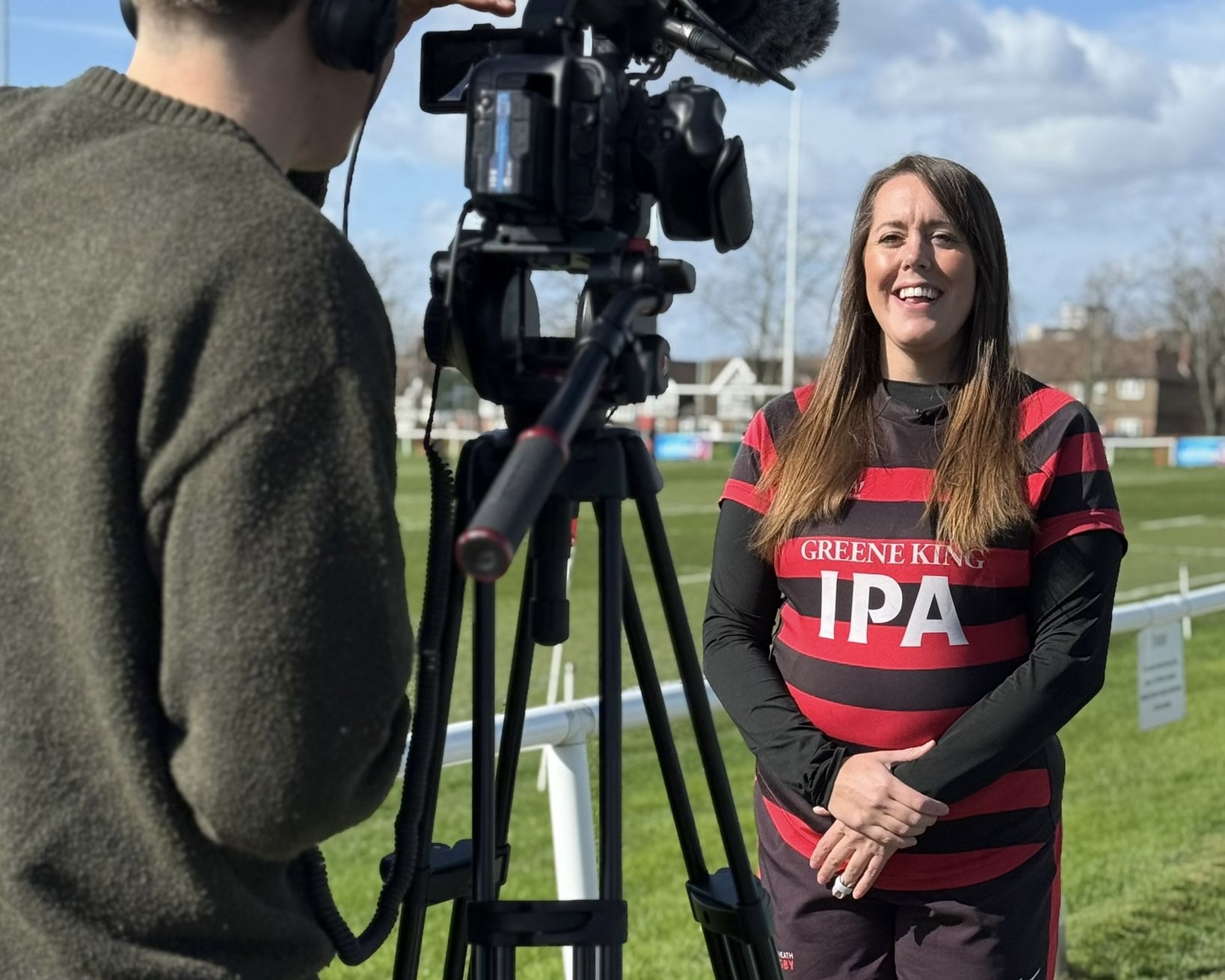
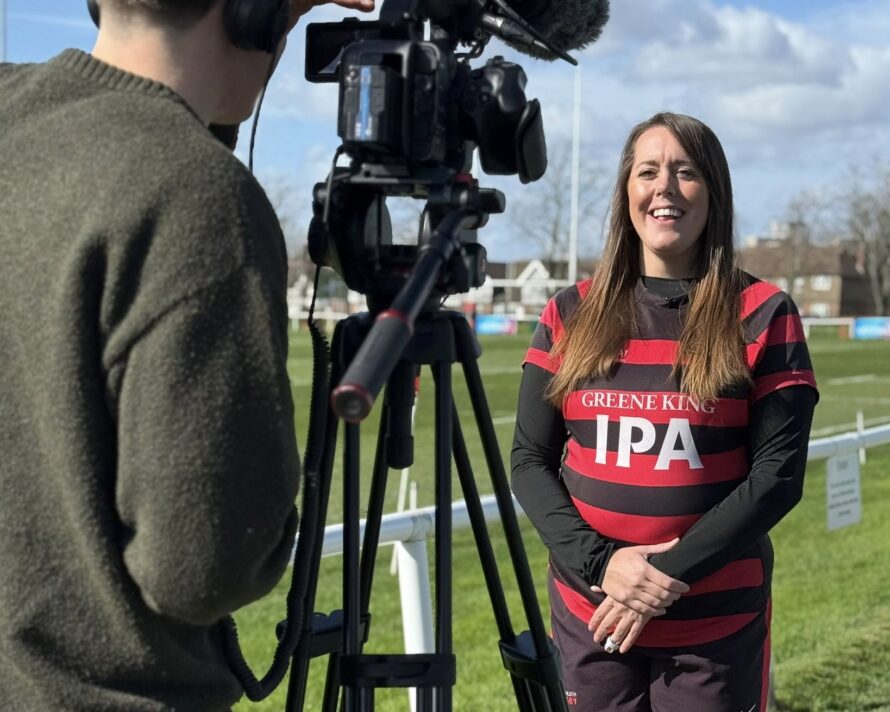
“I wouldn’t be here without them”: Emily Rutter and the rebuild of Blackheath Women
She’s played 200+ games, broken a wrist in three places, and was part of a team that ran a defence so good they celebrated every clean sheet with donuts. Now she’s helping rebuild the women’s team for the next forty years, and she’d like you to know she’s not doing it alone.
There’s a moment in every good interview where you realise you’ve stopped asking questions and started just listening. With Emily Rutter, it came about ten minutes in, and it didn’t let go for the next hour.
Emily is a prop, a vet nurse, a 13-year committee veteran and, in her own words, a bit of a “player-coach” at Blackheath Women. She’s heading into her 17th season at the club and a tough rebuild. To understand how she got here, you have to start where she did: in the clubhouse.
Born into it
Emily’s rugby story begins before she ever picked up a ball. Her dad played for the Blackheath first team. Her mum worked behind the bar, which is where they met. Her mum’s best friend, also behind the bar, went on to marry her dad’s brother, who also played for the first team. Rugby wasn’t a hobby in her family. It was the family.
“I’ve always been Blackheath,” she told me. She grew up in and around the clubhouse, down at the ground every Saturday watching the games.
There was just one problem: there was nowhere for her to play. When Emily was a teenager, the opportunities for girls simply weren’t there. At school, the options were rounders, netball, hockey and tennis. That was it. No rugby, no football, no cricket.
“When we were kids, if you did sport, it was just weird. Girls and sport? Why would you do sport? You were always the outlier.”
So like almost everyone in her generation, she’d have to wait until university.
From the Royal Veterinary College to Blackheath
Emily studied at the Royal Veterinary College in Camden (she’s now a vet nurse) and, sensibly, stayed at home to save a fortune on rent. She started playing at 18, which makes the coming season her 19th in the game.
Her route into Blackheath Women was a little more roundabout. She joined partway through a season, fitting rugby around chasing work and juggling multiple jobs. But the pull of the place was always there. I asked her how she’d describe Blackheath to someone who’d never set foot in it.
“It’s basically my family. There is genuinely nowhere else I’d rather be of a weekend.”
It’s an “addictive community”, she says, the sort that creates the best friendships and the best environment. Whether she’s playing on a Sunday or supporting the men on a Saturday, it’s where she wants to be.
The art of the front row
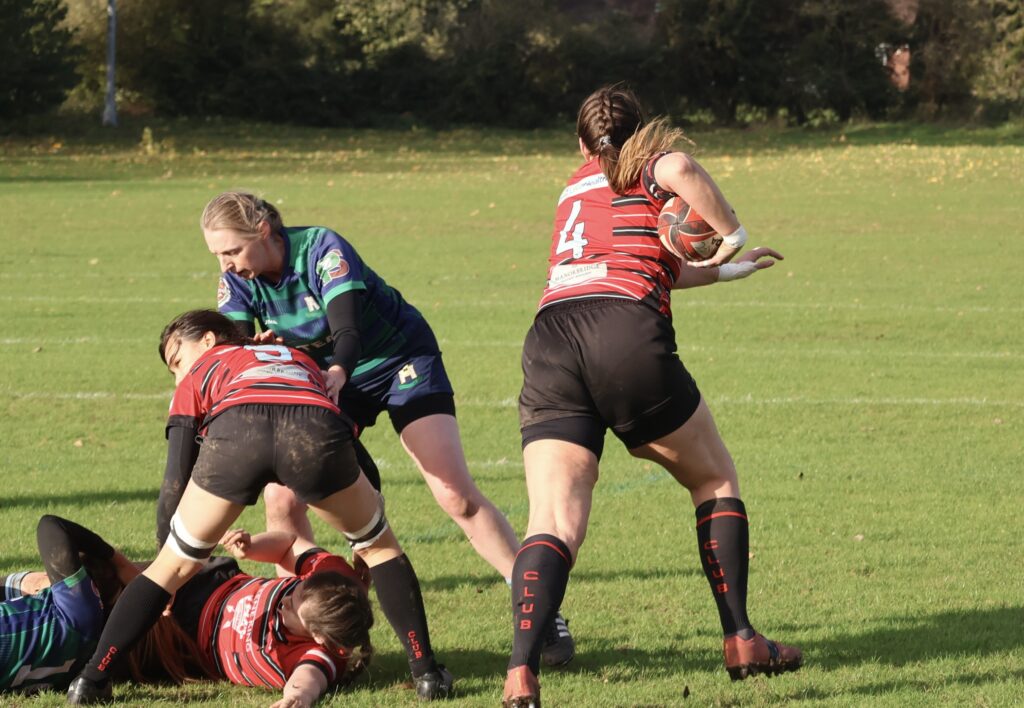
By now, Emily has made well over 200 appearances, almost all of them in the front row. So I asked a question I’d always wanted to put to a prop: what are you actually thinking when you’re about to go down for a scrum?
The answer is wonderfully direct. Thought one: I’m not going to be pushed backwards. Thought two: how am I going to beat the player opposite me? Some opponents are naturally stronger, and some know how to cheat legally, outskilling you with the dark arts. The art is in outsmarting them while staying on the right side of the law.
She’s also old enough to have played before the scrum laws changed. Until 2013/14, the call was crouch, touch, engage. The “touch” meant reaching out to the opposite shoulder to set the distance, and in front-row folklore it also meant “who can deliver the harder dead arm”. “Two rhinos coming together,” she said of the extra space it created. I asked if she’d ever done any boxing. “No,” she laughed, “but I think I should have.”
The Haskell Award and the art of the planned injury
Emily insists she’s never had a major injury. This is a slightly generous claim, given the list.
She’s broken her wrist. She’s broken multiple bones in her hands at once. But here’s the thing: every break has come at the end of a season or just before Christmas. She once snapped her fingers in the last game before the break. The doctor said four weeks. The next game was in four weeks. “Fine. Don’t miss any games.”
“I only take injuries,” she said, deadpan, “when I’ve actually got time to recover.”
(I suggested she should be giving talks to professional players on exactly this.)
The wrist is the best story, though. Emily started the game, took the kick-off, and burst through the entire defence, a metre from the line. All that stood between her and the try was a tiny full-back. She drove into her and shattered her wrist, 25 seconds after coming on. It earned her the team’s end-of-season “Haskell Award”, named after the England forward who famously knocked himself out about 45 seconds into a game. Eight weeks later, she was back in time for pre-season.
16 tours in 17 years
If the rugby is the heart of Blackheath, the tours are the soul.
Emily has been on 16 tours in 17 years, not missing one. And the origin story is brilliant. When she first joined, she’d grown up hearing about the men’s tours: Bermuda, Spain, Argentina, Las Vegas. So she asked where the women were going. The answer was Southwold. And the year before? Something equally local.
“I said, right, next year we’re going abroad, and I’m going to plan it.”
She did. And it was, in her own words, a complete disaster, and still one of the best tours she’s ever been on. Incorrect names on the flights. Overweight luggage. A broken lift. A last train that never turned up. One teammate who had to chase the bus down the motorway in a taxi.
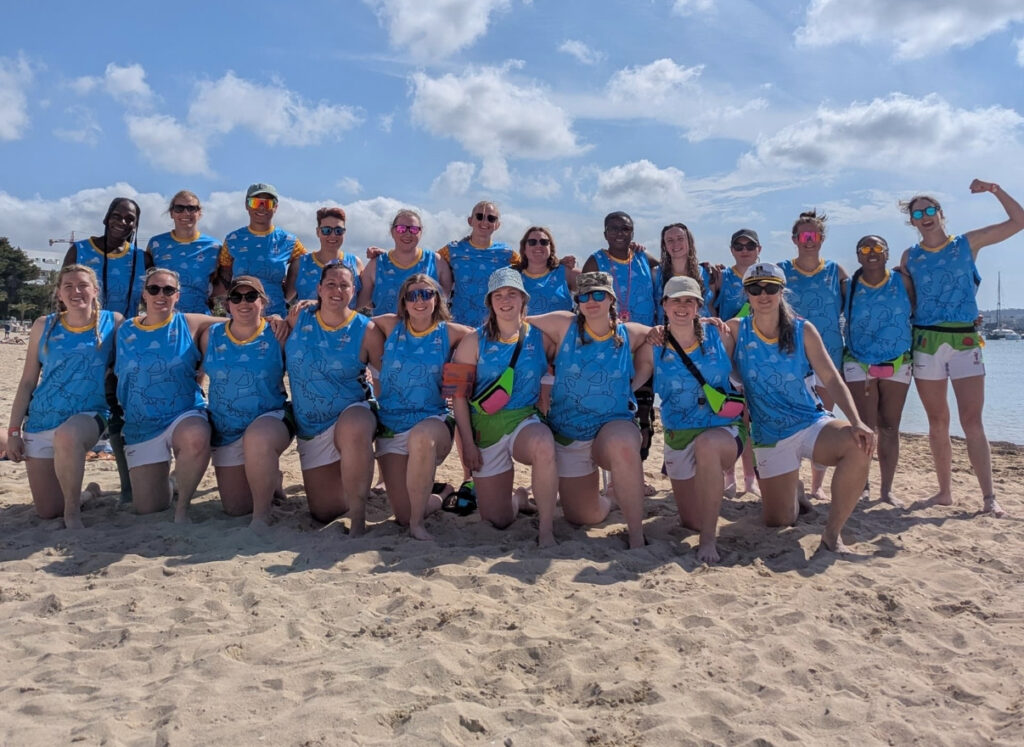
These days, tours are mostly abroad and mostly beach rugby, which works because it’s five-a-side and still doable when injuries bite. Ibiza, Majorca and Mexico 7s (with the men’s first team) have all made the list. As for what happens on tour, I said I’m sure there are lots of stories she can’t tell. She smiled. What goes on tour…
Twelve points. Twelve. In a whole season.
Then I asked about the best team she’d played in, and she told me about a season I genuinely didn’t believe at first.
2015/16. Championship South East 2. Fourteen league games. Fourteen wins.
Blackheath Women scored 471 points that season. They conceded twelve: two tries and a conversion, shared across two opponents. The next-best defence in the division had conceded around 80. Emily reckons no one else in the UK has come close, and I’m inclined to agree.
The architect was coach Marc Crump, who got the side promoted from Championship 2 to Championship 1 and helped build a second team too. “He was super hot on defence,” she said. He even brought donuts for the team whenever they kept the opposition to nil, a nod to the zero on the scoreboard.
Was it boring? Not for a second. Some games they scored 60, some just 20. They simply shut everyone out.
It was a long way from today’s friendlies, too. Back then, Blackheath were playing across the country, up to Newcastle, Plymouth and Bath, with the squad fundraising to pay for coaches. Sundays were match days, and if they went out at all, it was a Friday night. At Championship level, a Saturday night out simply wasn’t an option.
More than just playing
Alongside the rugby, Emily has given the club almost everything else. She’s been on the committee for 13 of her 17 years, covering everything from Chair to Social Secretary. Last year, she helped organise the ball for the Women’s 40th anniversary, with the founding members in the room.
But ask her about all that and she’ll quickly steer the credit elsewhere. “I wouldn’t be doing this, or be here, if it wasn’t for all the hard work the previous and current Women’s committee members have done,” she told me. “And the amazing players have made my whole experience at Blackheath the lifeblood it has now become for me.”
And what a history they’ve got. According to Emily, the women who set up Blackheath helped organise the early women’s Rugby World Cups, which the RFU refused to recognise at the time. A group of clubs simply decided to go ahead anyway. The team also hosted Canada in a warm-up match, and were the first outside New Zealand to have the haka performed to them. They’ve even played in the Premiership before.
That history is exactly why she can’t bear the thought of the section folding.
“As much as the men’s is part of the club’s foundation, Blackheath Women is part of the women’s foundation.”
The rebuild
Which brings us to the present, and the hardest chapter yet.
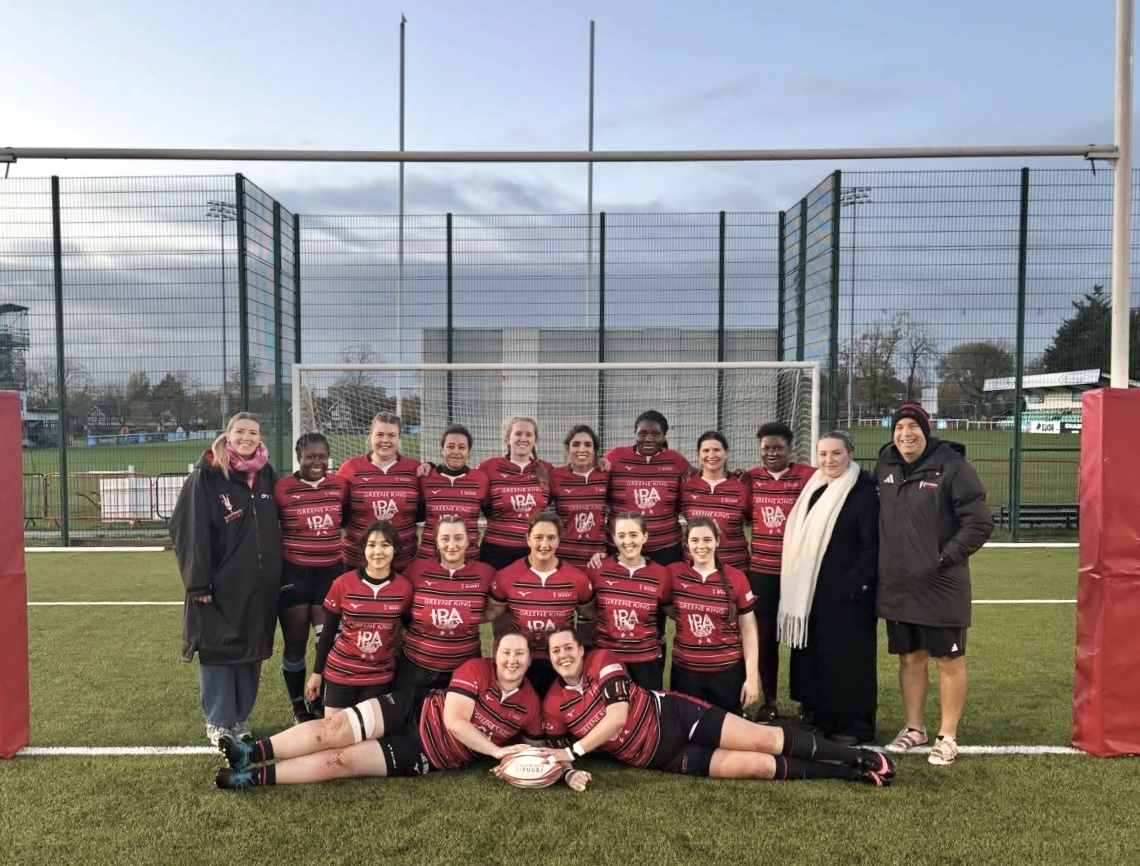
Last season, the league campaign collapsed. After COVID, numbers dwindled, and Blackheath were playing in a league they didn’t have the bodies for. They started this year with just eight players left from the previous season, so they’re playing friendlies while they rebuild. Emily’s side travelled to Old Reigatians for their latest, and it ended up 8v8. They’d arrived with 12, the hosts had eight, and everyone simply shared the numbers out.
Here’s what I loved: she isn’t embarrassed by it. Eight-a-side today, she says, means fifteen-a-side soon. For the last game, they travelled with 15.
The signs of recovery are real:
- Two brilliant new coaches this season, who’ve brought “great spirit” to the club
- Eight players from last season who stuck around to carry the torch
- A whole crop of fresh faces
- A target to be back in a league next year
- A five-year dream of running two teams
They train every Wednesday night on the 3G, alongside the men’s social side. And Emily is quick to point out that none of this is a one-woman show: it’s the committee, the coaches and the players, past and present, who are carrying the rebuild together.
I’d argue the secret weapon is something Emily came up with herself.
The course nobody else was running
Emily noticed a gap. Women’s rugby, unlike the men’s game, is full of people who try it for the first time as adults. They haven’t grown up with it, and they don’t know a ruck from a rock. Turning up to a normal training session in that state is, as she put it, being “thrown in the deep end”, and plenty of people never come back.
So she suggested a free six-week introduction to rugby for absolute beginners, and designed and coached the sessions herself with the backing of the women’s committee and the exec. The structure was simple and clever. Week one was passing. Week two moved on to running lines and rucks. By week six, the group was doing full contact. “Real deep end stuff,” she laughed, but it gave everyone a proper taste.
The numbers speak for themselves: 42 people filled out the form, and 38 turned up to at least one session. Marketing was all social media, because with only a few players left, there wasn’t the manpower to canvass south-east London. Some decided it wasn’t for them. A couple loved it but lived too far away. Emily was completely fine with that:
“It’s not that you come down to us and you have to stay with us. It’s the fact that you’ve got to try it.”
Wherever they end up playing, they’ll know what offside is. They’ll know to pass backwards. They’ll be less daunted walking into a club that’s already up and running. Another four-week course is planned for January, this time with posters in every local library, shop and noticeboard the squad can reach.
(If you run a club and you’re reading this: take notes.)
Building for the next forty years
Emily says she’s got at least three more seasons in her, with the target of 250 caps. That’s roughly 330 hours on the pitch, nearly 14 full days of rugby, if you do the maths on the back of an envelope, which we did, live, on the call. She thinks the 250th might be her last game. I told her that would be poetry.
And after that? Coaching, eventually. For now, she’s a player-coach, taking drills, liaising with the coaches and building the environment around her.
“The rugby at the moment isn’t about me anymore. I’ve done my years. It’s about the girls who are playing now, and building something that keeps going for another 40 years.”
The bigger picture: women’s rugby
Having lived through the whole arc, Emily has a unique view of how far the women’s game has come, and how far it still has to go.
What’s changed? When she started, the idea of England women filling a stadium wasn’t even on the radar. Now the Women’s Six Nations is on regular TV and England have paid contracts. Girls are told that being strong and powerful is something to aim for, not something to hide. And the community is a joy: even rivals will share contacts, information, even players. “Nobody within the women’s community wants to see any other team fold.”
What’s holding it back? Visibility. In New Zealand, a sports channel shows games at every level: women’s, minis, juniors, the lot. In the UK, she was frustrated to see the women’s games moved onto iPlayer while the main BBC channel showed an old film. She wants the women’s game on free-to-air TV, even pre-recorded, even in the daytime:
“The amount of mums, the amount of people you’d just reach with it on in the background… that would massively elevate it.”
Social media, she adds, is where women’s players already shine for sponsors. But exposure is what will make it grow.
Schools. Emily’s own school gave her four sports. Rugby wasn’t one of them. She’d love to see it offered to girls everywhere, tag or contact, and she makes a point that stuck with me: with contact rugby, there’s a place for everyone. If you’re built like an ox, you’re a front-rower. If you’re small and quick, you’re out wide. “There isn’t a person rugby excludes.”
We also went down a fascinating rabbit hole about youth rugby around the world. In France, a former teammate told her, boys and girls play together until 15. In New Zealand, it’s split by weight rather than age. Emily’s point? The early split at 11 in this country might be worth questioning. And locally, things are moving: clubs around Kent are building girls’ sections, with Medway running the biggest girls’ side in the country.
The “ladylike” problem. The thing that frustrates her most is a referee telling a player something isn’t “ladylike”.
“Do you think we’re giving up our Sundays, training twice a week and going to the gym, for somebody to call us ladylike?”
There’s no such thing as male things and female things, she says. There are activities, and rugby is one of them.
“Test your boundaries”
I finished by asking what she’d say to any girl thinking of trying the sport. Her answer: test your boundaries. Rugby makes you fitter and stronger, yes, and gives you friendships for life. But it also makes you more resilient, a better decision-maker, and opens doors you never knew were there, like those tours. On a bad day at work, she says, you don’t go home. You turn up for your teammates, and you leave feeling a hundred times better.
Which is exactly the point Emily kept coming back to. Behind every cap, every tour and every rebuild is a committee that kept the lights on and a group of players who kept turning up.
As far as she’s concerned, they’re the real story.
Interview by Oliver Addis, TheTackleBagChat
LATEST NEWS